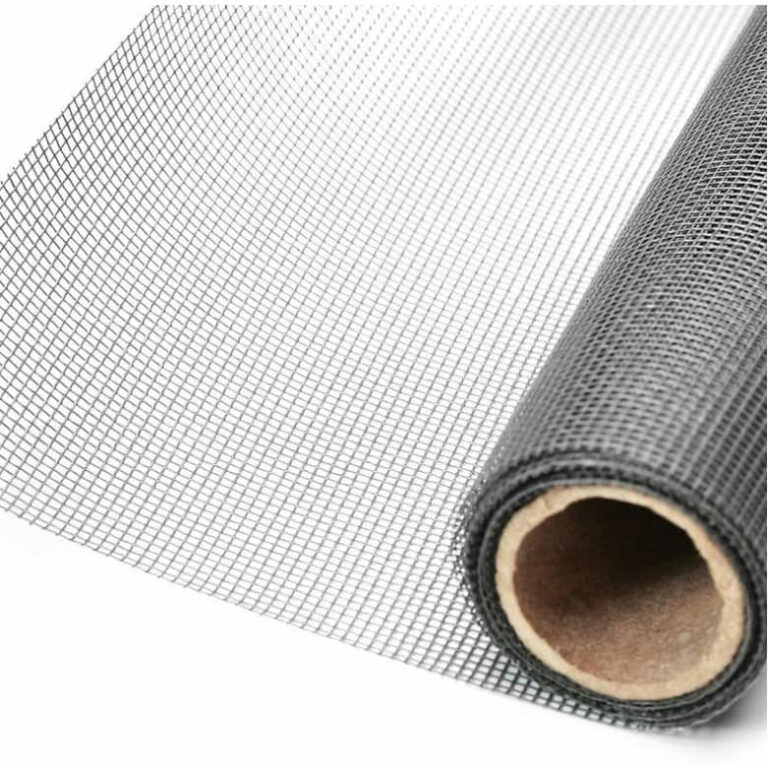
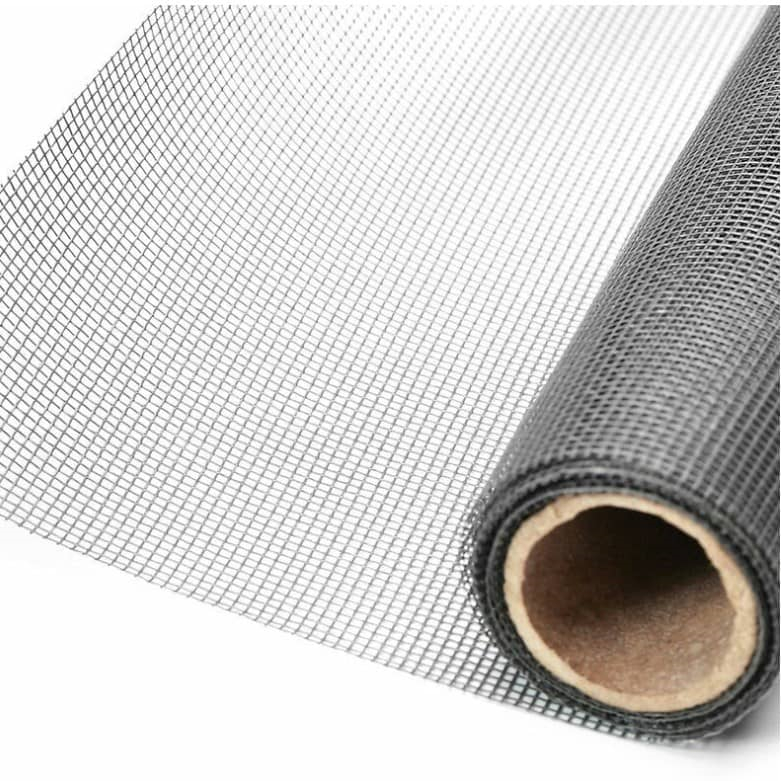
Why fiberglass appears in Insect Screens The incorporation of glass fiber into insect screens is no coincidence—this material acts like an invisible skeleton, granting the mesh unique advantages:
Strength Boost: A single glass fiber strand offers 3 times the tensile strength of steel wire while remaining lightweight.
Shape Stability: Maintains form from -50°C to 300°C, preventing mesh deformation from thermal expansion/contraction.
Corrosion Resistance: Fully immune to moisture and mold, extending service life 5-fold compared to standard plastic nets.

Correct Posture for Safe Use Although fiberglass has outstanding performance, pay attention to these details during use: Installation protection: Wear cotton gloves to avoid direct contact with exposed fibers.
Cutting technique: Use sharp scissors to cut quickly and minimize fiber dispersion. Cleaning method: Wipe with a damp cloth instead of beating to prevent fiber shedding.
Damage handling: Replace immediately if holes appear; avoid makeshift repairs.
3.Future Trends of Superior Materials New composite materials are rewriting the evolutionary history of insect screens:
Nanocoating technology: Forms a protective film on fiber surfaces, maintaining strength while preventing fiber shedding.
Bio-based materials: Polylactic acid fibers derived from cornstarch, combining eco-friendliness with durability.
Smart responsive materials: Memory alloy fiber nets that automatically adjust mesh density based on temperature.

 English
  Français
  Deutsch
  Русский
  Español
  Türkçe
  Italiano
  العربية